
Our Daily Bread | The Lord’s Prayer| Week 4
Series: The Lord’s Prayer | Week 4
Text: Matthew 6:11
Our Heavenly Father calls us to draw from Him every moment of every day.
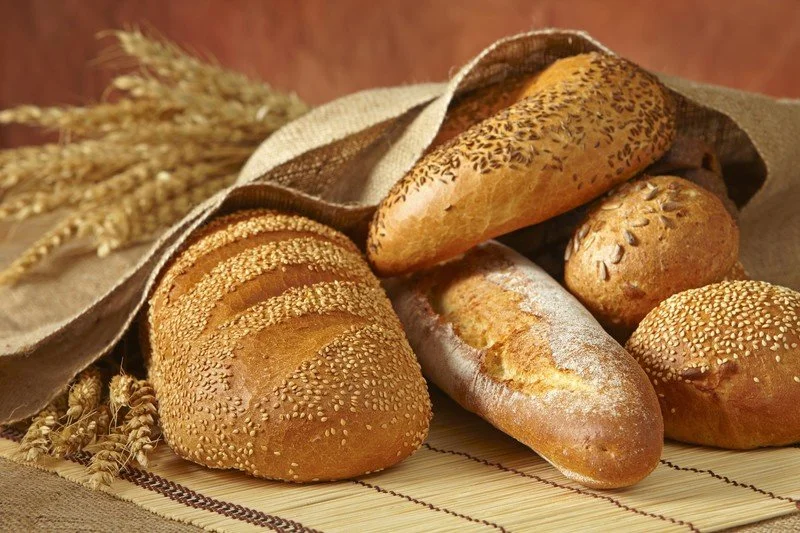
This petition trains dependence. It resists self-sufficiency by asking together (“give us”) and remembers a Father who delights to provide what sustains body, soul, and spirit. Persistent, pure-motive asking becomes the daily rhythm that keeps communities humble, grateful, and generous with one another.
Here’s a thought: Progress in the kingdom of heaven is made with pure motives and determined prayers.
I grew up on a farm and faith and hard work were strong values in our household. Dad worked long hours, especially when we had a dairy farm. Those cows needed to be milked twice a day every day. Seeding in the spring and harvesting in the fall meant extra-long hours in the fields - and extra help was needed. Dad would do what he could, but he knew there was a lot out of his control. The sun needed to shine and the rains needed to fall at the right times. A hail storm could wipe out thousands of dollars in seed and weeks of work in just a few minutes. Early snowfall could undo months of labour and patience. While Dad worked hard, he also trusted the Lord. Farming provides many opportunities for faith to be exercised and strengthened.
In a country that enjoys a relatively high standard of living and government programs when times are tough it is easy to lose sight of our provider. We can start to believe there is an inexhaustible supply of all that we need at the store. 2,000 years ago, the Roman government did not provide support the way ours do today. Families and communities looked after the vulnerable. Those who did not have this support begged for help. Life was challenging and people could not take food for granted.
While the disciples listened to Jesus explain how to pray, they realized the significance of Matthew 6:11: “Give us this day our daily bread.” KJV
Our Father wants us to:
Request of Him
Jesus has taught us in Matthew chapter 6 why and to whom we should pray. He continues to teach us what to pray in one of the easier memory verses in the Bible: “Give us this day our daily bread.”
Throughout this model prayer Jesus uses the first-person plural rather than the first-person singular. He teaches us to pray “Our Father”. Here in Matthew 6:11 Jesus teaches us to pray “Give us …” We would tend to pray “Give me …” Here in the Western world, we tend to think of “every man for himself”. While I prefer capitalism over socialism or communism, capitalism without generosity or a conscience can be used to justify greed and individualism.
A man was overheard confessing at the seed cleaning plant, “I'm a greedy farmer who gets really bad headaches. They're my grains.”
Yes, we are to be hard-workers who take responsibility for earning our keep. The Apostle Paul addresses idleness in 2 Thessalonians 3:10, “For even when we were with you, we gave you this rule: ‘If a man will not work, he shall not eat.’” NIV
Note that Paul says, “If a man will not work.” He does not say, “If a man cannot work.” There is a big difference between being unwilling and unable to work. The Bible speaks against laziness frequently. Families, communities, businesses, churches and governments should neither tolerate nor enable laziness. We should all be active within our abilities and limitations. Living with a purpose and working hard are vital to our psychological, physical and financial health. However, if someone is not capable of working or is going through extenuating circumstances, we should do what we can to help.
With this “community mindedness” we can pray “Give us …” The Lord directed the Israelites about 1500 years Before Christ in Leviticus 23:22:
When you reap the harvest of your land, do not reap to the very edges of your field or gather the gleanings of your harvest. Leave them for the poor and the alien. I am the LORD your God. NIV
This is a brilliant plan! The Lord does not say, “Gather the gleanings, bundle them up, grind the grain, make the bread, bake the bread, slice the bread, bag the bread and deliver it to the poor and the alien (the foreigner living among you).” This is what we should do for those who are unable to do it for themselves. Instead, the Lord says, “Leave the gleanings of your harvest for the poor and the alien to gather and to make their own bread.” This strategy preserves people’s dignity by giving them the opportunity to provide for themselves and their families.
When we ask the Lord to provide for us, we think not only of ourselves but of those who depend on us and of how we can give others opportunities to put bread on the table. When we ask the Lord to provide for us, we also think of the part we play in putting bread on the table.
J. Vernon McGee illustrates:
An old pastor in Georgia used to make this statement: "When a farmer prays for a corn crop, God expects him to say 'Amen' with a hoe." If you are praying about a certain matter, get busy with it.”
We might think that we are bothering our Heavenly Father when we present our requests to Him. He is not put out by us asking; He actually invites us and wants us to ask. Can you imagine a dad depriving his dependent children of the necessities of life? Even the law has consequences for such selfishness and irresponsibility. As a father, I enjoy blessing our children. It brought me a deep sense of satisfaction to provide for our children when they were growing up. It brought me great joy to see them receive gifts I knew they wanted.
This is the kind of heart Jesus describes in Matthew 7:7-11:
7 Ask and it will be given to you; seek and you will find; knock and the door will be opened to you. 8 For everyone who asks receives; he who seeks finds; and to him who knocks, the door will be opened. 9 Which of you, if his son asks for bread, will give him a stone? 10 Or if he asks for a fish, will give him a snake? 11 If you, then, though you are evil, know how to give good gifts to your children, how much more will your Father in heaven give good gifts to those who ask him! NIV
The Amplified Bible brings out the present tense of these verbs in Matthew 7:7-8:
7 Keep on asking and it will be given you; keep on seeking and you will find; keep on knocking [reverently] and [the door] will be opened to you. 8 For everyone who keeps on asking receives; and he who keeps on seeking finds; and to him who keeps on knocking, [the door] will be opened.
Jesus doesn’t teach that we need to wear down our Heavenly Father by our incessant nagging and begging so He will finally relent and give us what we want. Instead, He teaches us to be persistent in our asking, seeking and knocking because our zeal and perseverance will yield great rewards. We are to ask with wholeheartedness and singlemindedness. We are to press in and we will be rewarded! You do not have, because you do not ask God. When you ask, you do not receive, because you ask with wrong motives, that you may spend what you get on your pleasures (James 4:2b-3). Progress in the kingdom of heaven is made with pure motives and determined prayers.
What do we and the people around us need? Let’s ask our Heavenly Father. What do we want? Let’s consider why we want it and ask for it with a submissive attitude, “Not my will, but yours be done.”
Our Father wants us to:
Request of Him
Rely on Him
When those who first heard Jesus teach us to pray, “Give us this day our daily bread,” the minds of these Jewish listeners would go to when they were completely dependent upon the Lord after they left Egypt and travelled through the wilderness on the way to the Promised Land.
Look at Exodus 16:1-5:
1 The whole Israelite community set out from Elim and came to the Desert of Sin, which is between Elim and Sinai, on the fifteenth day of the second month after they had come out of Egypt. 2 In the desert the whole community grumbled against Moses and Aaron. 3 The Israelites said to them, “If only we had died by the LORD's hand in Egypt! There we sat around pots of meat and ate all the food we wanted, but you have brought us out into this desert to starve this entire assembly to death.” 4 Then the LORD said to Moses, “I will rain down bread from heaven for you. The people are to go out each day and gather enough for that day. In this way I will test them and see whether they will follow my instructions. 5 On the sixth day they are to prepare what they bring in, and that is to be twice as much as they gather on the other days. NIV
Does God drop food in our mouths like a mother bird feeds her babies? Maybe. Sometimes. Usually, though, we play a part in gathering and preparing our daily bread. Even the Israelites had to gather the manna. While I would recommend asking our Father rather than grumbling to our Father, He graciously provided the Israelites with their daily bread in a desolate land.
Skip ahead to verse 15:
When the Israelites saw it, they said to each other, “What is it?” For they did not know what it was. Moses said to them, “It is the bread the LORD has given you to eat." NIV
Jump down to Exodus 16:31: "The people of Israel called the bread manna. It was white like coriander seed and tasted like wafers made with honey.” NIV
Coriander is a member of the parsley family (as was Elvis). The leaves of the plant are commonly called cilantro, which comes from the Spanish word for coriander, or Chinese parsley. This word “manna” literally means in Hebrew, "What is it?" Doesn't this make you smile? Just so you know, my wife, Brenda, is a good cook. I don’t remember sitting down to eat a meal she has prepared and having to ask, “What is it?” Our Father is gracious, but He also has a sense of humour. I can almost hear Him say while the Israelites grumbled and pined for the “good ole’ days” when they were slaves in Egypt, “You want bread? I’ll give you bread. I will give you manna to eat for the next 40 years!”
By the way, what kind of bread do lemons eat? Sourdough.
Why did the Lord provide the Israelites with their bread each day? Do you think He had a short supply and could only afford to provide them with a daily quantity? Of course not! He did this not for His sake but so the Israelites would learn to seek Him, depend on Him and obey Him every day. Does this mean we should live hand to mouth with no planning, saving or investing? The Bible commends these activities.
Our Father’s call to depend on Him every moment of every day doesn’t make sense to us. Our parents taught us and we taught our children to be independent. This is healthy and helpful for everyone concerned. Parents, if your adult children still depend on you for a roof over their heads, clothes on their backs and bread on the table, you need to make some adjustments for their own good. How will they grow up & learn to live on their own? If you are an adult child and you still depend on your parents for the basic necessities of life, you need to make some adjustments for your own growth, progress and maturity. Our Heavenly Father does not want us to depend on our earthly parents indefinitely, but He does want us to draw from Him every moment of every day.
Jesus set the example for us and He described it in John 5:19:
Jesus gave them this answer: “I tell you the truth, the Son can do nothing by himself; he can do only what he sees his Father doing, because whatever the Father does the Son also does. NIV
Jesus could not do anything apart from the Father! Let the impact of this declaration soak in. The Son of God lived for more than 33 years on earth with the keen awareness of His reliance on God the Father. When He was just 12 years old, Jesus knew He was to be in His Father’s house (see Luke 2:41-49). I am sure there were many other instances not recorded in the Gospel accounts of Jesus speaking and acting in complete dependence on His Father. If this is true of the Son of God, how much more should we rely on our Father?
The book of Deuteronomy is a repetition of the Law given to Moses to prepare a new generation of Israelites for life in the Promised Land. The Lord summarizes His dealings with them in Deuteronomy 8:1-5:
1 Be careful to follow every command I am giving you today, so that you may live and increase and may enter and possess the land that the LORD promised on oath to your forefathers. 2 Remember how the LORD your God led you all the way in the desert these forty years, to humble you and to test you in order to know what was in your heart, whether or not you would keep his commands. 3 He humbled you, causing you to hunger and then feeding you with manna, which neither you nor your fathers had known, to teach you that man does not live on bread alone but on every word that comes from the mouth of the LORD. 4 Your clothes did not wear out and your feet did not swell during these forty years. 5 Know then in your heart that as a man disciplines his son, so the LORD your God disciplines you. NIV
Jesus quotes part of verse 3 in Matthew chapter 4, when the devil tempted Him to turn stones into bread. In both Deuteronomy and Matthew, the theme is reliance upon our Heavenly Father. Why does He test us with challenges? So we will grow. Why does He allow us to be hungry? So we will remember our provider. Where does our bread come from? Mother Nature? No, Father God! Our bread or everything that we need comes from the mouth of God.
Bread has come to be regarded as something less than what it was in Bible times. We don’t usually think of it as a symbol of life’s necessities. In Jesus’ day, however, bread represented nourishment in all its many forms. Bread can include nourishment for our bodies, souls and spirits. We need food so we can grow and maintain physical, psychological and spiritual health. Our Father provides us with everything that we need.
We have had challenges with our Internet Service Providers over the years. Living in the country, we cannot access a cable connection so we rely on a wireless signal. Each time we have started out with a new provider full of hope and optimism. Each time we realize the connection is inconsistent and undependable. Likewise, we can put our hope in different “providers” that show they are inconsistent and undependable. After walking with Him for most of my life, I can assure you there is One who is consistent and dependable: our Heavenly Father.
Here is a simple phrase I encourage you to whisper when you get up tomorrow morning, go through your day and lay your head on the pillow tomorrow night: “Father, I need you.” I then encourage you to rinse and repeat the next day and the day after that. Eventually, you will have cultivated the habit of continual dependence upon our Father every moment of every day.
Our Father wants us to:
Request of Him Rely on Him
Our Heavenly Father calls us to draw from Him every moment of every day.