
Our Father | The Lord’s Prayer| Week 2
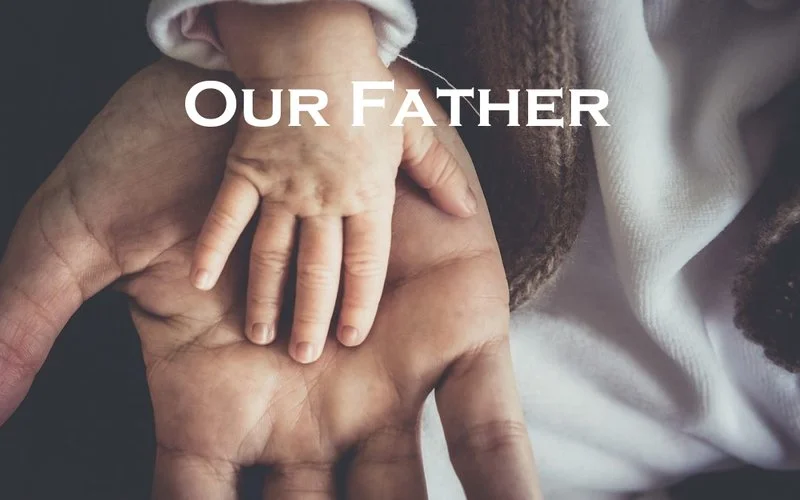
Prayer exposes what (and whom) we trust. In teaching “Our Father,” Jesus shifts attention from performance to relationship—away from wordy, self-impressing prayers toward simple, sincere conversation with the Holy God who invites His children to come together as family. This opening line grounds prayer in the Father’s nearness and authority: He is in heaven yet present with His people, set apart and worthy of reverence. Begin here, and everything that follows in the Lord’s Prayer finds its shape.
Here’s a thought: Someone has observed, "The world may doubt the power of prayer; the saints know better."
If I wanted to be good at something, I would read and watch what I could about this skill. If I were serious about growing in this area, I would commit to practicing this skill. If I knew someone who was really good in this skill, I would ask them to show me and tell me how they do it. I want to pray well and I want you to pray well. Who better to turn to than the “Grandmaster” of prayer?
I will quote the King James Version, because this is most familiar to us. Jesus teaches in Matthew 6:9, “After this manner therefore pray ye: Our Father which art in heaven, Hallowed be thy name." KJV
Jesus provides this part of prayer:
How
Jesus had just explained why we should pray - because our Heavenly Father calls us to value eternity and simplicity. He warned us against the practices of Jewish religious leaders and pagans, who looked for temporal rewards by trying to impress the people around them with their complicated, eloquent, flowery prayers.
Richard Steussy reports:
At our weekly Bible study, the leader asked an elderly gentleman, Walt, to open the meeting with prayer. Walt did so in a soft voice.
Another man, straining to hear, shouted, “I can’t hear you!” Walt replied, “I wasn’t talking to you.”
Having established that motives come before methods when we approach our Heavenly Father, Jesus goes on to explain the “how” and “who” of prayer. It is possible to put more trust in “how” we pray than “to whom” we pray. While we tend to think of prayer as a religious activity, a duty we perform to gain the approval and attention of God, Jesus provides a pattern or example for us to follow. While we gravitate toward repeating a lot of words, He teaches us to keep our prayers simple and straightforward. He says in Matthew 6:5-8, “Don’t pray this way and don’t pray the way these people pray.” He basically goes on to say in verse 9, “Now that I have told you how not to pray, let’s talk about how to pray.” We can dismiss what Jesus teaches and continue to pray in our own, home-made way to the god we want or we can obey Him and follow His pattern.
Luke 5:15-16 describes something that Jesus did repeatedly:
15 Yet the news about him spread all the more, so that crowds of people came to hear him and to be healed of their sicknesses. 16 But Jesus often withdrew to lonely places and prayed. NIV
I can see the disciples shrugging their shoulders and I can hear them muttering to each other, “What? Where is He going? What is He doing? We have people to see, places to go and things to do!” When they realized that He was slipping away to pray, I am sure they wondered, “I get that you went off to pray, but how did you pray?” What do you talk to God about all this time?
How do you structure this conversation? We could call this model prayer “The Disciples’ Prayer”.
No one knew better than Jesus how to pray. He had, after all, enjoyed perfect unbroken communion with the Father and the Holy Spirit since before time began. We can receive great advice from other people in the Bible, from generations past and who live today, but no one is more qualified to teach us how to pray than the Son of God Himself. Jesus didn’t take a copy of the Hebrew Bible or the rabbis’ prayers with Him when He slipped away to pray. He couldn’t download a prayer guide from the Internet or open a prayer app on his smartphone. He seemed to have a structure for His prayer times but I’m sure He didn’t simply repeat the Lord’s Prayer all night. I have a hunch that Jesus shared this model prayer to provide some structure for holy conversation. I wonder what I would say if someone asked me, “How do you communicate with your wife?”
I would encourage you to memorize this prayer. I memorized the King James Version because it is the best known. Although there is value in memorizing and verbalizing His model prayer, I don't think the Lord intended for a recitation of these words to be the extent of our prayer. Jesus did not say “pray these words” but “pray like this”.
It was a “watershed moment” when the Lord’s Prayer was taken out of public schools in Canada, reflecting Christianity’s lessened influence and the rise of pluralism across our nation. While we might ring our hands and pine for the “good ole’ days”, the truth is that a person can recite the Lord’s Prayer with a heart that is a million miles from God. Did the church lobby the Roman government 2,000 years ago to have the Lord’s Prayer said aloud in schools? I hope you know the answer to this question is no, but why wasn’t the church concerned about this? Because they focused on changed hearts which eventually resulted in a changed world. This model prayer that Jesus teaches is intended not for the general public but for His followers.
Someone has observed, "The world may doubt the power of prayer; the saints know better."
While we don’t see references in the Book of Acts or the letters of the New Testament to praying this model prayer, we see elements of this prayer sprinkled throughout. It appears to me that the early church did not take this as a command to recite this prayer verbatim or word-for-word.
The earliest references that we have to a pattern of Christian daily prayer is that of praying three times a day, and it comes from the Didache [a teaching handbook written by and for the Christian community], written toward the end of the first century. It states that the Lord’s Prayer should be said three times a day, but does not say at which times. Later, the pattern of praying at the third, sixth and ninth hour of the day [9:00 a.m., 12:00 noon and 3:00 p.m.] became established (with arguments from Scripture). Origen, in the third century recommended another session or prayer in the evening.
Would you like to memorize our Lord’s model prayer for His disciples? Would you allow this pattern to shape how you pray?
Jesus provides these parts of prayer: How
Who
We are a praying people. The question is not if we pray but to whom we pray. You might wonder about this, but prayer is not just the typical picture we paint in our minds. Merriam-Webster dictionary defines prayer as "an address (such as a petition) to God or a god in word or thought". You don’t have to kneel to pray, you don’t have to fold your hands to pray, you don’t even have to speak to pray.
Whether we believe there is a God or not, we all place our trust in someone or something. Whether we verbalize our prayers or not, we tell ourselves, our God or our god that we place our trust somewhere or in someone. This trust is revealed under pressure when times get tough. Do you place your trust in human reasoning? Then your mind will determine your course in life. Do you place your trust in the government? Then your peace will be determined by whoever is in office. Do you place your trust in the stock market? Then your joy will go up and down like a yo-yo. Do you place your trust in the people around you? You will be satisfied, disappointed, glad or frustrated by how they interact with you.
David writes in Psalm 20:7, "Some trust in chariots and some in horses, but we trust in the name of the LORD our God." NIV
It is significant that Jesus teaches us to pray “Our Father”. He doesn’t teach us to pray “My Father”. While He is your Father and He is my Father, Jesus calls us to come together as we go to our “Our Father”. Because we have the same Father, we are brothers and sisters. Yes, our Father interacts with each son and daughter in unique ways but He intends for us to live out our relationship with Him as a family and a community. This speaks directly to us today, confronting our culture’s individualistic tendencies. Yes, we can meet with God in our prayer closet or in nature, but we should always remember that He is our Father and He is to be approached individually and together.
This is one of the reasons that we gather.
A Sunday School teacher began her lesson with a question, "Boys and girls, what do we know about God?"
A hand shot up in the air. "He is an artist!" declared a kindergarten boy. "Really? How do you know?" the teacher asked.
The boy replied, “You know - Our Father, who does art in Heaven …"
Why does Jesus teach us to address God as “Our Father”? Is God male? The Bible has about 170 references to God as the “Father”. Jesus referred to God as Father and there are nearly 900 verses from Acts through Revelation where the Greek word theos [from which we get the word theology] – a masculine noun - is used in reference to God. Does this mean that God is a man with male private parts? God is a spirit (John 4:24), so He does not have a physical body.
We read in Genesis 1:27, "So God created man in His own image; in the image of God He created him; male and female He created them." NIV
Both the male and female genders possess and express characteristics of God in ways that are unique and complimentary. Has our Creator made you a male? Embrace this and enjoy your “maleness”. Has our Creator made you a female? Embrace this and enjoy your “femaleness”. He knit you together in your mother’s womb. You are fearfully and wonderfully made (Psalm 139:13-14). While God has expressed Himself as our Father, He has all the characteristics of a mother, since the female is also made in His image.
Our Father is in heaven. Deism is a belief in the existence of a supreme being, specifically of a creator who does not intervene in the universe. The term is used chiefly of an intellectual movement of the 17th and 18th centuries that accepted the existence of a creator on the basis of reason but rejected belief in a supernatural deity who interacts with humankind (from Oxford Languages). Does this mean that we should be deists, believing that God wound up the universe like a clock and stepped back to watch time tick away? Does this mean that God is somewhere out there in a distant galaxy but uninvolved in our lives?
David writes so beautifully in Psalm 139:7-8:
7 Where can I go from your Spirit? Where can I flee from your presence? 8 If I go up to the heavens, you are there; if I make my bed in the depths, you are there. NIV
Our Father is in heaven, but He is also very much here on earth. In fact, when we ask Jesus in, we become temples of the Holy Spirit (1 Corinthians 6:19). In other words, the Father is in heaven, on the earth, under the earth and in us by His Holy Spirit. What does Jesus mean, then, that our Father is in heaven? He means that our Father is high and exalted above anything and anyone that is created. He is not like gods that we fashion with our minds and/or with our hands then set on a pedestal.
Our Heavenly Father is different from anyone else in the universe. He is holy. He is set apart. He is to be hallowed. He and His name are to be revered.
ChristianAnswers.net lists 950 names and titles of God in the Bible, but, strictly speaking, there is only one proper name for God. This name, YHWH, is translated as “LORD” in the English Bible. Since the Hebrew language did not originally have vowels and Jewish people would not say His holy name aloud, we cannot be certain how to pronounce it. The Western Church has traditionally pronounced it as “Jehovah” but most academics would pronounce it as “Yahweh”.
Jesus trusted His Heavenly Father completely and He invites you and me to do the same. When we think of someone being holy, we tend to think of someone who is separated, isolated, aloof, untouchable, unemotional, out of touch with the realities and hardships of everyday life. Fortunately, or unfortunately, our images of God as our Father can often be shaped by the relationships we had – or didn’t have – with our earthly fathers. Were you tolerated, overlooked, abused or abandoned by your dad? Our Father wants you to know that He is holy and set apart, the same in some ways but very different in other ways from imperfect men and imperfect representatives of Him here on earth. Our Father loves you and He loves me. Will we trust Him enough to open up to Him with our sincere, heartfelt prayers?
Jesus provides these parts of prayer:
How Who
Our prayers reveal our source of trust.