
We All Pray | The Book of Daniel | Week 7
Series: The Book of Daniel | Week 7
Text: Daniel 6:1-28
God calls us to place our hope in Him.
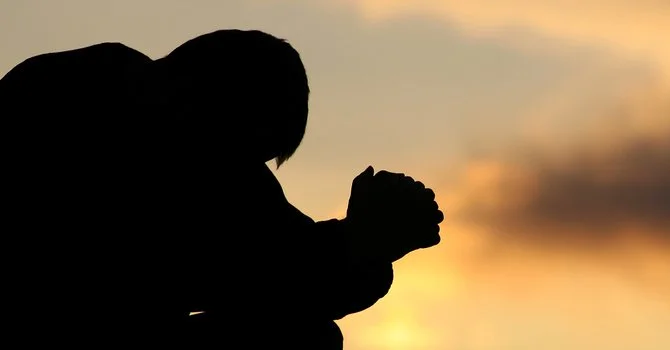
When life presses in, everybody prays to something or someone. Daniel’s windows were open because his heart already was. He didn’t make a scene; he made a habit. Lions’ dens come and go, but hope anchored in God holds steady.
Here’s a thought: The question is not if we pray but to whom or what we pray.
We have all felt the hope and anticipation in the weeks leading up to Christmas. We have looked forward to time with family and friends, to giving and receiving gifts, to a great meal, to eggnog, to chocolates and poppycock. We probably prayed for specific presents when we were children. As we get older, this hope and anticipation can wane as our childhood experiences grow more distant in the rear-view mirror. Our idealism can morph into realism as the disappointments and dashed dreams pile up. Somebody should ask the question, “Where is our hope?”
Hope took on different forms more than 500 years Before Christ, but they are similar today. Let’s look at these different kinds of hope and how people expressed them in Daniel 6:1-28:
1 It pleased Darius to appoint 120 satraps to rule throughout the kingdom, 2 with three administrators over them, one of whom was Daniel. The satraps were made accountable to them so that the king might not suffer loss. 3 Now Daniel so distinguished himself among the administrators and the satraps by his exceptional qualities that the king planned to set him over the whole kingdom. 4 At this, the administrators and the satraps tried to find grounds for charges against Daniel in his conduct of government affairs, but they were unable to do so. They could find no corruption in him, because he was trustworthy and neither corrupt nor negligent. 5 Finally these men said, “We will never find any basis for charges against this man Daniel unless it has something to do with the law of his God.” 6 So the administrators and the satraps went as a group to the king and said: “O King Darius, live forever! 7 The royal administrators, prefects, satraps, advisers and governors have all agreed that the king should issue an edict and enforce the decree that anyone who prays to any god or man during the next thirty days, except to you, O king, shall be thrown into the lions’ den. 8 Now, O king, issue the decree and put it in writing so that it cannot be altered - in accordance with the laws of the Medes and Persians, which cannot be repealed.” 9 So King Darius put the decree in writing. 10 Now when Daniel learned that the decree had been published, he went home to his upstairs room where the windows opened toward Jerusalem. Three times a day he got down on his knees and prayed, giving thanks to his God, just as he had done before.
11 Then these men went as a group and found Daniel praying and asking God for help. 12 So they went to the king and spoke to him about his royal decree: “Did you not publish a decree that during the next thirty days anyone who prays to any god or man except to you, O king, would be thrown into the lions’ den?” The king answered, “The decree stands - in accordance with the laws of the Medes and Persians, which cannot be repealed.” 13 Then they said to the king, “Daniel, who is one of the exiles from Judah, pays no attention to you, O king, or to the decree you put in writing. He still prays three times a day.” 14 When the king heard this, he was greatly distressed; he was determined to rescue Daniel and made every effort until sundown to save him. 15 Then the men went as a group to the king and said to him, “Remember, O king, that according to the law of the Medes and Persians no decree or edict that the king issues can be changed.” 16 So the king gave the order, and they brought Daniel and threw him into the lions’ den. The king said to Daniel, “May your God, whom you serve continually, rescue you!” 17 A stone was brought and placed over the mouth of the den, and the king sealed it with his own signet ring and with the rings of his nobles, so that Daniel’s situation might not be changed. 18 Then the king returned to his palace and spent the night without eating and without any entertainment being brought to him. And he could not sleep. 19 At the first light of dawn, the king got up and hurried to the lions’ den. 20 When he came near the den, he called to Daniel in an anguished voice, “Daniel, servant of the living God, has your God, whom you serve continually, been able to rescue you from the lions?” 21 Daniel answered, “O king, live forever! 22 My God sent his angel, and he shut the mouths of the lions. They have not hurt me, because I was found innocent in his sight. Nor have I ever done any wrong before you, O king.” 23 The king was overjoyed and gave orders to lift Daniel out of the den. And when Daniel was lifted from the den, no wound was found on him, because he had trusted in his God. 24 At the king’s command, the men who had falsely accused Daniel were brought in and thrown into the lions’ den, along with their wives and children. And before they reached the floor of the den, the lions overpowered them and crushed all their bones. 25 Then King Darius wrote to all the peoples, nations and men of every language throughout the land: “May you prosper greatly! 26 “I issue a decree that in every part of my kingdom people must fear and reverence the God of Daniel. “For he is the living God and he endures forever; his kingdom will not be destroyed, his dominion will never end. 27 He rescues and he saves; he performs signs and wonders in the heavens and on the earth. He has rescued Daniel from the power of the lions.” 28 So Daniel prospered during the reign of Darius and the reign of Cyrus the Persian. NIV
We pray to:
Idols
Darius the Mede captured Babylon and placed Daniel in a high position of honour at the end of Daniel chapter 5. Being one of three administrators who ruled over the kingdom, people who coveted his position surrounded Daniel.
While King Darius planned to promote Daniel to second in command, his colleagues looked for ways to bring him down. However, as hard as they looked, they could not find any flaws in his character, judgment, and leadership. Having served wisely and consistently, Daniel was now in his eighties. Under his watch, deceit and corruption could not run rampant.
These corrupt, jealous power-seekers came up with a scheme to trip up Daniel and cause him to fall out of favour with the king. Even though the Persians were very religious and worshiped many gods, it would seem the administrators and satraps played on the king’s ego and suggested that he issue a decree that citizens worship only him over the next 30 days. These tricksters knew that Daniel would not comply, and one of them could take his place.
I received this is in my fortune cookie at Irricana Family Restaurant on July 30th, 2020: “You will be called to fill a position of high honour.” These guys would have prayed for a fortune like this!
The Bible defines an idol as an object of worship other than God. It is typically an image or statue, but it can be anyone or anything that is our source of hope. Daniel 6:7 tells us that people would pray to gods and other humans in their generation.
The administrators and satraps decided they could choose their object of worship. In this case, it was the king. Idolaters often form images of what a god should be. The worthiness of worship is decided by human beings when they choose who or what they will worship. In this case, setting up the king as the nation’s object of worship was not for anyone’s benefit but their political ambitions. Their proposal would flatter the king and place Daniel in conflict with his convictions.
The Bible is full of examples of people drifting into idol worship. The Apostle Paul warns in 1 Corinthians 10:14, “Therefore, my dear friends, flee from idolatry.” NIV
Praying to idols produces misplaced trust. The folly of these men’s ways was revealed and led to their destruction. Time has a way of showing people’s hearts and bringing about the consequences of decisions. If we build our lives and allegiances on the foundation of sand rather than firm ground, the storms of life will cause it all to come crashing down.
What idols are being worshipped in Canada today? Which ones are most enticing to you?
We pray to:
Idols or
Ourselves
After King Darius fell into the trap set by the administrators and satraps, he realized he had made a mistake and did all he could to rescue Daniel. There was no way out, for he could not repeal his law. Surely Darius knew of Daniel’s devotion to God, but his memory failed him, and this scheming and pandering clouded his judgment. If, after all, he was a god to be worshipped, he could not admit that he made a poisonous mistake.
Two snakes were hanging out when one asked the other, “Hey, are we poisonous?”
The other snake replied, “I’m not sure.”
“Well, I hope not,” the first snake explained, “because I just bit my tongue.”
Darius put everything on the back burner as he worried about his friend, loyal subject and trusted advisor Daniel. He spent the rest of the day trying to wriggle out of this trap and rescue Daniel from the consequences of his reckless decision. He painted himself into a corner, and he threw his right-hand man into the den of lions.
Then the king returned to his palace and spent the night without any food and entertainment brought to him. Imagine, a whole night without chips & Netflix! And he could not sleep. There is no mention in the text of King Darius praying to God or any of the Persian gods. Instead, he spent the night wrestling with his thoughts, talking to himself, praying to himself.
Praying to ourselves creates anxiety. Thoughts are constantly flitting through our brains, some circle and land while others swoop and fly away. Like King Darius, if we see ourselves as the higher power, there is no higher power to which we can appeal. Sooner or later, everyone hits the wall. We come to grips with our mortality and limitations. We are on a crash course with fear and worry until we change our ways.
Secular humanism is the dominant worldview in Canada. It places our ability to reason on the throne of our lives individually, as communities and as a nation. While this philosophy typically denies the existence of a supreme being, it is a form of religion that calls for our loyalty. Anything and anyone that we deem to be illogical is to be dismissed and discarded. Unless we can figure it out and explain it, we determine it is not worth keeping. However, there are countless things and ideas in our lives and our universe beyond our understanding.
The Apostle Paul teaches in Philippians 4:6-7:
6 Do not be anxious about anything, but in everything, by prayer and petition, with thanksgiving, present your requests to God. 7 And the peace of God, which transcends all understanding, will guard your hearts and your minds in Christ Jesus. NIV
When anxiety arises and overtakes us, this is a sure sign that we have placed our trust in idols or ourselves. This anxiety is a helpful warning light, which many people ignore, suppress or medicate by looking for people, pleasures and possessions to drown out these troubling, nagging thoughts.
How much do you rely on your understanding to navigate your way through life? Have you had enough of living with fear, worry and anxiety?
We pray to:
Idols Ourselves or
God
We first met Daniel in this book when he was a teenager, but he was a much older man by this time. When Daniel learned that the decree had been published, he went home to his upstairs room, where the windows opened toward Jerusalem. Three times a day he got down on his knees and prayed, giving thanks to his God, just as he had done before. There is no mention of Daniel consulting with his three friends, Shadrach, Meshach, and Abednego, but we get a glimpse into his private life. He knew that the king crossed the line by prohibiting him from praying to God. Daniel was not a rebel who liked to undermine the king’s authority. He and Darius had a close relationship marked by mutual honour and respect. However, Daniel consistently and faithfully saw his relationship with God as the highest priority. The result was a life marked by wisdom but not necessarily by popularity. The administrators and satraps caught him in the act and reported to King Darius his “crime” of praying to God.
According to Oxford Languages, prayer is “a solemn request for help or expression of thanks addressed to God or an object of worship.” Prayer can include bowing our knees, folding our hands and closing our eyes, but much more than that. There are times to pray like Daniel did three times a day, but I have a hunch that he prayed more often than this. I am confident that he prayed under his breath in this spiritual darkness and pressure.
We are taught in 1 Thessalonians 5:17 to pray without ceasing or to pray continually. We could not possibly do this if we limited prayer to bowing our knees, folding our hands and closing our eyes. To pray is to direct our thoughts and words to our source of strength. Our prayers reveal our source of hope.
Where are you placing your hope? Betsy St. Amant addresses this question:
Statistics have proven that just saying or reading the word stress can instantly spike someone’s blood pressure, however subtly. I believe the same is true for the word hope. It often causes a visceral reaction, however slight, of positive emotion. One doesn’t speak the word hope, so much as exhale it. It’s a breath and a prayer intermingled in one jam-packed syllable.
We all place our hope in someone or something. If we want to find out who, what or where our source of hope is, we need to track our thoughts and prayers. The question is not if we pray but to whom or what we pray.
Daniel chapter 6 does not guarantee the same results every time. More than 500 years after Daniel, another ruler threw people to lions. Brenda and I had the opportunity to visit the Colosseum in Rome, where:
Christians were fed to half-starved lions, burned alive, and hacked to death, but the most interesting aspect of this was that the Christians who died in the Colosseum wanted to die there as martyrs. At that time in the Roman Empire, Christians had a choice to sacrifice to the Roman gods or even have one of their slaves sacrifice to the Roman gods and avoid persecution. St. Ignatius, the first Christian who died in the Colosseum, chose to die for his religion in front of tens of thousands of people rather than escape persecution or die in a less public place. About 3000 Christian martyrs in all died in the Colosseum.
The results of these different prayers in Daniel chapter 6 are a study in contrasts. The king fed the administrators and satraps to the lions after praying to him. The king who recognized his frailty and mortality came to acknowledge the living, enduring God who reigns over all heaven and earth. Daniel prayed to God, and he was rescued, vindicated and promoted. Whether this happens here or in the hereafter, the Bible promises that praying to God produces lasting results.
Thomas Merton wrote in “No Man Is an Island”:
We are not perfectly free until we live in pure hope. For when our hope is pure, it no longer trusts exclusively in human and visible means, nor rests in any visible end. He who hopes in God trusts God, Whom he never sees, to bring him to the possession of things that are beyond imagination.
Where or to whom do you go when times are tough? Who would receive your call if you had only one phone call to make?
We all hope in - and pray to - someone or something. I want the kind of hope that does not depend upon people, circumstances, special events, finances, locations and possessions. These can all change. These come and go. I want to build my hope on a lasting foundation, on someone who is the same yesterday, today and forever. I want the same for you.
We pray to:
Idols
Ourselves
or
God
God calls us to place our hope in Him.