
You Gotta Believe | Faith Series | Week 6
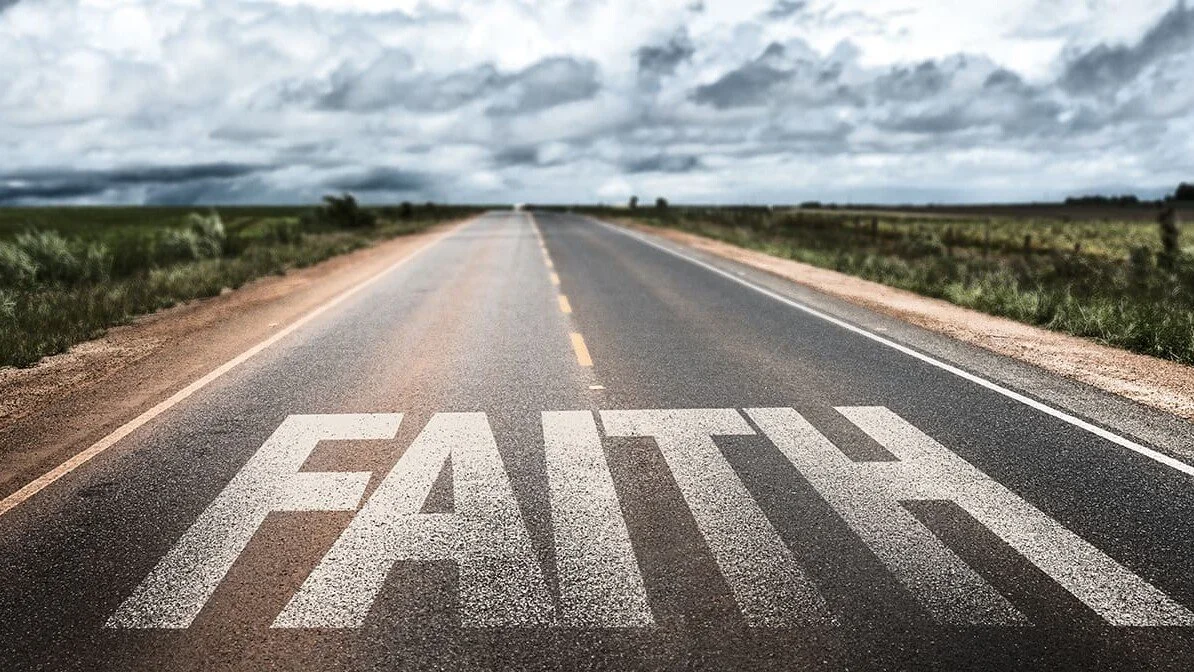
Faith isn’t a vague optimism but the decisive act of trusting God Himself. Drawing from Hebrews 6:1 and the broader witness of Scripture, the message distinguishes between admiring Jesus from a distance and actually entrusting your life into His hands. Saving faith has always been about leaning the full weight of your hope on God’s character and promises—just as Abraham did, and just as believers are called to do today. Genuine faith shapes how we live, prioritize, and persevere, because confidence in Christ becomes the centre from which everything else flows. In a culture that celebrates belief in “something,” this message calls hearers back to the only faith that saves: fixing our eyes on Jesus, the author and perfecter of our faith.
Here’s a thought: We are saved not by making promises to God but by believing the promises of God.
In the nineteenth century the greatest tightrope walker in the world was a man named Charles Blondin. On June 30th, 1859, he became the first man in history to walk on a tightrope across Niagara Falls. Over twenty-five thousand people gathered to watch him walk 1,100 feet suspended on a tiny rope 160 feet above the raging waters. He worked without a net or safety harness of any kind. The slightest slip would prove fatal. When he safely reached the Canadian side, the crowd burst into a mighty roar.
In the days that followed, he would walk across the Falls many times. Once he walked across on stilts; another time he took a chair and a stove with him and sat down midway across, cooked an omelet, and ate it. Once he carried his manager across riding piggyback. And once he pushed a wheelbarrow across loaded with 350 pounds of cement. On another occasion he asked the cheering spectators if they thought he could push a man across sitting in a wheelbarrow. A mighty roar of approval rose from the crowd. Spying a man cheering loudly, he asked, “Sir, do you think I could safely carry you across in this wheelbarrow?”
“Yes, of course.”
“Get in,” the Great Blondin replied with a smile.
There is a defining moment when faith is revealed as fake or real. Real faith is one of the basics of maturity in Hebrews 5:11-6:3:
11 We have much to say about this, but it is hard to explain because you are slow to learn. 12 In fact, though by this time you ought to be teachers, you need someone to teach you the elementary truths of God's word all over again. You need milk, not solid food! 13 Anyone who lives on milk, being still an infant, is not acquainted with the teaching about righteousness. 14 But solid food is for the mature, who by constant use have trained themselves to distinguish good from evil. 6:1 Therefore let us leave the elementary teachings about Christ and go on to maturity, not laying again the foundation of repentance from acts that lead to death, and of faith in God, 2 instruction about baptisms, the laying on of hands, the resurrection of the dead, and eternal judgment. 3 And God permitting, we will do so. NIV
We are called to:
Faith
Faith in God
We are called to:
Faith
We were born with faith. As helpless babies, we trusted in and relied upon our mothers and other caregivers to feed, clean and clothe us. We could not have survived without accepting such care. Faith continues to be exercised when we lock our doors, lie on our beds, ride in a vehicle, drop a letter in a mailbox, buy something online, send a text message or decide that our beliefs will get us to a better hereafter.
Hebrews 11:1 provides a general description of faith, “Now faith is being sure of what we hope for and certain of what we do not see.” NIV
Someone has explained, “Faith is the daring of the soul to go farther than it can see.”
Simply put, the biblical definition of faith is “trusting in something you cannot explicitly prove.” This definition of faith contains two aspects: intellectual assent and trust. Intellectual assent is believing something to be true. Trust is actually relying on the fact that the something is true. A chair is often used to help illustrate this. Intellectual assent is recognizing that a chair is a chair and agreeing that it is designed to support a person who sits on it. Trust is actually sitting in the chair.
Researchers have discovered that people will believe anything that you tell them researchers have discovered.
Whether we believe in creation or evolution, faith is required to provide the interpretation and application of scientific facts. Whether we are atheists, agnostics, Moslems, Buddhists, Sikhs, Hindus, Jews or Christians we have reached conclusions about God, the meaning of life and what happens after death. We all have faith.
How does your faith shape your priorities? How does your faith influence the way you look at life and death?
We are called to:
Faith
Faith in God
We all have faith. The question is, “Who or what is the focus or object of our faith?” Do you place your trust in human reasoning, your sense of oneness with the universe, Mohammed or in Jesus Christ?
The Bible’s definition of “faith” and “believing” is different from our culture’s definition. We are not called to have faith in ourselves or in anyone or anything else. We are not called to have faith in faith.
A survey conducted by the Angus Reid Institute found that amongst Canadians 67% believe in God or a higher power, 60% believe in life after death, 53% believe that God is active in the world, 57% believe in heaven and 41% believe in hell.
The Washington Post published the winning submissions to its yearly contest, in which readers were asked to supply alternate meanings for common words. One of the winners is, “Frisbeetarianism (n.), The belief that, when you die, your soul flies up onto the roof and gets stuck there.”
Many Canadians would say it is important to have faith but the focus or object of our faith is not so important. Is it enough to have faith in some Higher Power or “the man upstairs”?
Steps two and three of "The 12 Steps of Alcoholics Anonymous"are a good start:
We came to believe that a Power greater than ourselves could restore us to sanity.
We made a decision to turn our will and our lives over to the care of God as we understood Him.
These are statements of faith in God and are a step in the right direction. However, they beg the question, “Who is God?” For some recovering alcoholics, God is the God of the Bible as revealed through Jesus Christ. For others, God is whoever or whatever you want him or it to be.
James 2:19 talks straight:
You believe that there is one God. Good! Even the demons believe that - and shudder. NIV
The One who made us and who offers the way of salvation to us is not pleased with faith in and of itself – unless it is faith in Him.
The story about Charles Blondin and the wheelbarrow makes it clear, doesn’t it? It’s one thing to believe a man can walk across by himself. It’s another thing to believe he could safely carry you across. But it’s something else entirely to get into the wheelbarrow yourself. It’s not enough to believe that Christ theoretically could save you. Until you “get in the wheelbarrow” and trust all to Him, you are not saved.
Hebrews 12:2 names the One who is the focus of our faith:
Let us fix our eyes on Jesus, the author and perfecter of our faith, who for the joy set before him endured the cross, scorning its shame, and sat down at the right hand of the throne of God. NIV
Faith is the key for a relationship with God throughout the Bible. Even before Jesus established the New Covenant through His death, burial and resurrection, people did not establish relationship with the Lord by keeping the Law. “Living biblically” is not living Levitically or like a Levite, it is living by faith. We might think that the Jewish people were saved by offering sacrifices but salvation through the ages has always comes by faith and not by works.
Hebrews 11:1-3 goes on to describe the One who is the focus of our faith:
1 Now faith is being sure of what we hope for and certain of what we do not see. 2 This is what the ancients were commended for. 3 By faith we understand that the universe was formed at God's command, so that what is seen was not made out of what was visible. NIV
Hebrews 11:6 underscores the importance of faith:
And without faith it is impossible to please God, because anyone who comes to him must believe that he exists and that he rewards those who earnestly seek him. NIV
“The righteous will live by faith” is a principle and promise God declares in Habakkuk 2:4 more than 600 years Before Christ then repeated several times in the New Testament (Romans 1:17, Galatians 3:11 and Hebrews 10:38).
We can go back to 1900 years Before Christ when the aging Abram or Abraham received the promise of a son. Abraham believed the Lord, and he credited it to him as righteousness (Genesis 15:6). You need to understand that Abraham was about 85 years old (MacLaren’s Expositions)! It would take a miracle for him to become a father at this stage in his life.
Abraham believed God, which is literally, "Abraham said, 'Amen, God!"' The Hebrew word translated "believed" means "to lean your whole weight upon." Abraham leaned wholly on the promise of God and the God of the promise. We are saved not by making promises to God but by believing the promises of God. In the Gospel of John, which was written to tell people how to be saved (John 20:31), the word "believe" is used nearly 100 times. Salvation is the gracious gift of God, and it is received by faith (Ephesians 2:8-9).
What was Abraham's greatest need? Righteousness. This is the greatest need of people in our world today, for "all have sinned, and come short of the glory of God" (Romans 3:23). "There is none righteous, no, not one" (3:10). It is not enough to be "religious"; God demands that we have perfect righteousness or He will not let us enter His heaven.
How did Abraham receive this righteousness? He believed the Lord, and righteousness was imputed to him. "Impute" means "to put to one's account." (from The Bible Exposition Commentary: Old Testament © 2001-2004 by Warren W. Wiersbe. All rights reserved.)
The door to a relationship with God is marked “faith”. By believing in the life, death and resurrection of His Son, Jesus Christ, we enter His household of faith (John 3:16). This, however, is just the beginning! Jesus calls us to live each day in His household by faith - talking to Him, listening to Him and obeying Him.
The Apostle Paul explains in Romans 10:16-18 that life-changing faith arises when we hear, believe and obey God’s voice:
16 But not all the Israelites accepted the good news. For Isaiah says, “Lord, who has believed our message?” 17 Consequently, faith comes from hearing the message, and the message is heard through the word of Christ. 18 But I ask: Did they not hear? Of course they did: “Their voice has gone out into all the earth, their words to the ends of the world.” NIV
Dwight L. Moody (1837-1899) was a passionate preacher of the gospel. The first line of Moody’s autobiography was released in 1900 and it reads:
Some day you will read in the papers that D. L. Moody, of East Northfield, is dead. Don’t you believe a word of it! At that moment I shall be more alive than I am now. I shall have gone up higher, that is all; out of this old clay tenement into a house that is immortal - a body that death cannot touch; that sin cannot taint; a body fashioned like unto His glorious body.
Billy Graham left this earth on February 21st, 2018. Although many have attributed this quote to him, he never claimed credit for the words, though he identified with the message they express. He was in lockstep with Moody’s understanding of life and death and the hope of heaven so much so that he had very little to add.
Such faith shaped the way these men lived. Such faith should also shape the way we live.
Do you believe in Jesus Christ enough to follow Him? Do you believe in Jesus Christ enough to make your time, energy and money available to Him and to His work here on earth?
We are called to:
Faith
Faith in God
Faith is vital for a relationship with the Lord.